World Mental Health Day
Six reminders about everyday well-being and caring for others.
View the flyerSimple exercises you can use on your own, any time, anywhere. They won't replace support, but they can help you through a hard moment and give you a feel for how small practices build a steadier mind.

Awareness material, thoughtful check-ins and gentle guidance to go with the exercises below.
Six reminders about everyday well-being and caring for others.
View the flyerNotice whether pressure continues after the working day.
Try the check-inYou do not need to find the perfect words before reaching out.
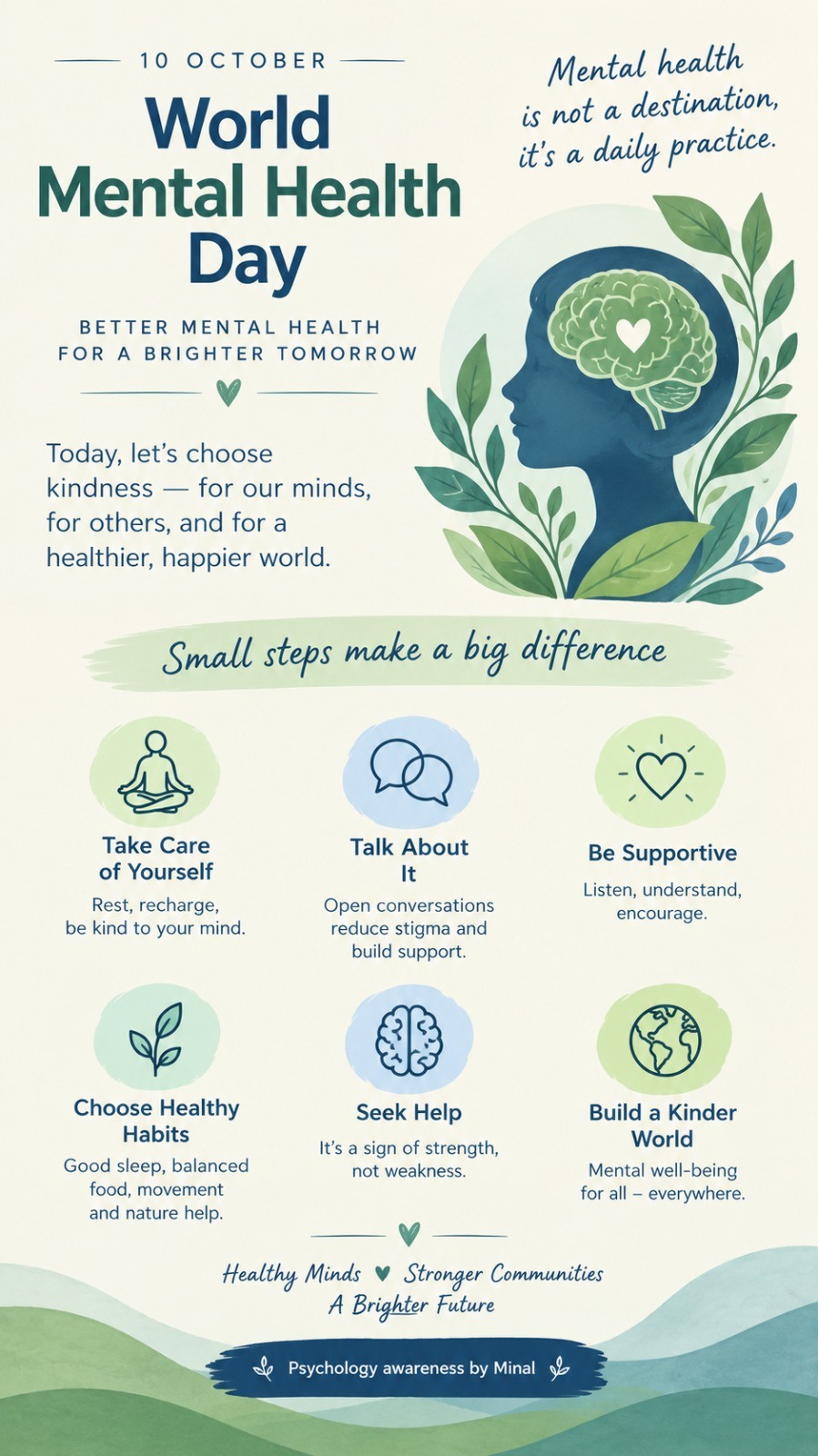
Explore first stepsThis free poster, created for 10 October 2026, shares reminders about taking care of ourselves, talking, healthy habits and kindness.
Free to view or save
Use this flyer to begin conversations about everyday mental well-being. It is general awareness material, not individual clinical advice.
Original educational flyer by Minal Marudkar, featured here with creator attribution.
Before you enquire
Start with whatever feels easiest: what changed, what is difficult, or what you hope could feel different. An initial message can be short and general.
Ask about qualifications, service suitability, fees, confidentiality and next steps before deciding. Avoid sending sensitive medical details through an initial Telegram or email enquiry.
How enquiries workSlow breathing with a longer out-breath tells your body it's safe to settle. Use it before a hard conversation, an exam, or when you can't sleep.
When worry pulls you into the future or the past, your senses can bring you back to now. Go slowly and name each thing, out loud or in your head.
A busy mind needs a runway to land. Try this for a week and notice what changes.
If worries follow you all day, give them an appointment instead. It sounds simple, and it works for many people.
These free exercises are general educational ideas, not a diagnosis or treatment plan. The resources below provide additional public guidance; linking to them does not mean those organisations endorse Sthit.
A practical illustrated guide to managing stress and grounding yourself.
Advice on gentle, unforced breathing practices.
Everyday sleep-hygiene and bedtime routine ideas.
Resource links checked October 2026. Please contact Sthit to report a broken link or accessibility issue. These public resources do not replace care from an appropriately qualified professional.
Self-help is a good start, but some things are easier with someone beside you. Consider talking to us, or to a doctor, if for two weeks or more you notice:
If you're having thoughts of harming yourself, please contact a helpline or emergency service now. You don't have to wait until things get worse.
Free, confidential support, available now. Sthit is not an emergency service, so in a crisis please use these instead.
| Where you are | Emergency | Mental-health support |
|---|---|---|
| India | 112 | Tele-MANAS 14416, free and 24/7 |
| Australia | 000 | Lifeline 13 11 14, 24/7 |
| United Kingdom and Ireland | 999 or 112 | Samaritans 116 123, free and 24/7 |
| European Union | 112 | Search your country at findahelpline.com |
| United States and Canada | 911 | Call or text 988, 24/7 |
| Anywhere else | Your local emergency number | findahelpline.com lists free helplines in over 130 countries |